
CMAP Outlines Its Proposal for Addressing the Region's Most Pressing Problems
Clip: 10/29/2026 | 7m 30sVideo has Closed Captions
Northeastern Illinois is facing more severe weather, an aging population and evolving technology.
Northeastern Illinois is facing more severe weather, an aging population and evolving technology. That trifecta is what the Chicago Metropolitan Agency for Planning calls the poly-crisis. The group created a roadmap to help the region prepare for the next 100 years.
Problems playing video? | Closed Captioning Feedback
Problems playing video? | Closed Captioning Feedback
Chicago Tonight is a local public television program presented by WTTW
WTTW video streaming support provided by members and sponsors.
CMAP Outlines Its Proposal for Addressing the Region's Most Pressing Problems
Clip: 10/29/2026 | 7m 30sVideo has Closed Captions
Northeastern Illinois is facing more severe weather, an aging population and evolving technology. That trifecta is what the Chicago Metropolitan Agency for Planning calls the poly-crisis. The group created a roadmap to help the region prepare for the next 100 years.
Problems playing video? | Closed Captioning Feedback
Where to Watch Chicago Tonight
Chicago Tonight is available to stream on pbs.org and the PBS app.

WTTW News Explains
In this Emmy Award-winning series, WTTW News tackles your questions — big and small — about life in the Chicago area. Our video animations guide you through local government, city history, public utilities and everything in between.Providing Support for PBS.org
Learn Moreabout PBS online sponsorship>> Northeastern Illinois is facing mounting challenges like an uptick in severe weather and aging population and evolving technological needs.
That trifecta is what the Chicago Metropolitan Agency for Planning calls the Poliec Risis in response.
The group has created a roadmap in an effort to help the region prepare for those problems for the next 100 years.
And joining us now is Erin, all among the executive director of the Chicago Metropolitan Agency for Planning.
Good to see you.
Welcome back.
Yeah, thanks so much for having me.
So this century planned still in the preview phase.
It's kind of akin to, you know, the Daniel Burnham 19, 0, 9 plan of Chicago, you know, make no little plans.
You know, that really helped reshape the city in powerful ways.
Why is now the right time to be thinking on sort of a grand scale for our region?
One of the reasons why we think it's so important for us to be thinking towards the next century.
>> It's really because the problems that we're seeing today aren't problems that one community or multiple communities can solve on their own.
It's really the collective impact that I think we're going to need to be thinking about in order to address the systems that are going to set us up for success for the next century.
So talking about some of those problems you've identified kind of 5 big challenges to tackle in this plan.
>> The transportation water, the electric grid, housing and open space.
Why is it important to think about those holistically?
>> So as a regional planning agency, our role really is about thinking about systems and systems change and all of the systems that you just mentioned are interconnected.
You know, we can think about transportation without thinking about how transit could help us clean the air.
You know, our natural resources also help us things flooded.
And so we're trying to think about one of the system spot for regional action are going to make sure that we have the right economy and our competitive well into the future and talking about the inner conductivity.
You know, those last 2 housing and open space.
>> Given that the major housing shortage locally, you known around the U.S., how do you balance new development with maintaining, you know, necessary open space?
Well, that's one of the conversations were really excited to have right now is the tension between development and open space.
We know we need both.
We also know.
>> But if you don't plan for them together, it can be, you know, a challenge to go back and fix those things.
But as we think about housing today and we think about who's going to be here in the next 10, 2030, years.
We're expecting to have about 700,000 more people over the age of 65 by 28, 50, about 10% fewer people under the age of 20.
And so what types of housing to those people need and what kind of access to they need to outdoors to transit in order to live their best lives.
>> Well, in talking about, you know, the open space issue, I thought it was interesting that you, you know, obviously there's the question of just sort of natural beauty, natural resources.
There's also more practical things like stormwater the F to consider.
That's right.
The ecosystem services that are open spaces provides to communities helps reduce flooding.
It helps us reduce urban Heat island effects as well.
And so again, this idea of multiple converging challenges, we think these systems are going to again help support one another.
If plan for them correctly and talking about the issue of water, you know, we all know what a vital resource Lake Michigan is.
You know, kind of the jewel that we have right next to us.
But, >> you know, a lot of the communities and the sea map region.
They also rely on groundwater.
How sustainable is that resource?
So we have about it 0.6 million people who live in the region.
284 communities of those 284 communities.
>> Two-thirds of them are Lake Michigan, water and one-third of them are on groundwater.
The communities groundwater we're expecting to be in a drought scenario in their early 2030's.
And so while we have beautiful lake, we want to make sure that we are protecting the water that we have, that we're thinking about.
The future needs that our region has and recognizing that that's going to be attractive to lots of other people who potentially could come to the region.
How do we make sure that we have the resources available for whether those pressures start to emerge to sort of a question of of how best do we balance?
You know, that the needs of varying communities that, you know, maybe reducing water demands, things like that.
That's right.
And we've seen water demand reduces over time, you know, with more energy efficient appliances.
So they've been some real positives over the past couple of decades.
But again, it's really about making sure that the systems that we have today continue to provide fresh drinking water.
When you just turn on the tap and that the pricing for the water is affordable to everybody across our region and talking about the electric grid.
You know, there's challenges demands from data centers.
There's the need for cooling amid extreme heat by climate change.
>> What's the gap like between the current electric grids capabilities and what our region's going to need?
>> One of the amazing things about Illinois that's made us most economically competitive is that we are energy exporter right now, you know, but our projections are showing that by early 2030's, we're going to need to import energy in order to continue to sustain the business that we have today.
And so it's really important that we're thinking about where energy is.
You know, we might be thinking about where battery and stole solar storage is to help complement the grid that we have.
But if we are and positioning that system which was built for the last century, right for next century, I think again, like these are things that we're trying to get out ahead of and help support our communities and in the process.
Yes, it's not just across.
obviously there is the the environmental aspect of it trying to.
>> You know, make sure we have these, you know, clean energy sources.
It's also just a question of supply.
It sounds like it isn't, as we see sort of and goods movement and their their trucks transition to energy.
You know, a medium-sized delivery truck facility could consume as much energy as a community of 20,000 or 25,000 people.
So like Woodstock of Vernon Hills of that, you know, those are choices that we need to make beef be thoughtful about as we move forward.
You mentioned a public transit.
See map instrumental in helping develop the vision be time.
The new northern Illinois Transit Authority which now oversees CTA, Metra pace.
What are you going to be watching for?
As as metrics of success is NIDA begins its work in earnest, you know, just kind of took effect beginning of September.
Yeah.
Well, first, let me say I think that's a great example of how our region can do big things.
And so as we look to the next century, what we want to replicate that.
>> But I think for Neda, it's really about making sure that they're thinking about systems that they're thinking about the fair integration, you know, safety and security were also things that we heard a lot about moving forward.
But we really want to make sure that one time table, you know, one system that it's seamless for the user for the customer to get on and not sort of have to think about the modes that they're taking.
>> And, you know, given see maps success in helping to craft that vision to shape that future of transit.
Are you hopeful that you can get buy-in from state and local leaders to try and tackle these problems, holistically that you're looking at when you put together the final sentry plan.
>> We think so.
One of our great strengths that see a map is data information.
And so by telling a compelling story by showing where we can head in the future and how we can solve the solutions where we are excited about this entry plan and hopeful that next October one, it's adopted.
We have partners a line to help
 New
Manual Cinema Is Bringing 'Frankenstein' to Life at Studebaker Theater
Video has Closed Captions
The Chicago-based production company reimagines the Mary Shelley classic. (3m 23s)
 New
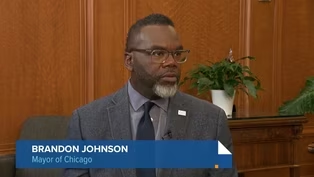
Mayor Brandon Johnson on Budget, Borrowing and More
Video has Closed Captions
WTTW News senior reporter Heather Cherone sits down with Chicago's mayor. (10m 36s)
Providing Support for PBS.org
Learn Moreabout PBS online sponsorship New Episode
- News and Public Affairs

Top journalists deliver compelling original analysis of the hour's headlines.

- News and Public Affairs

Today's top journalists discuss Washington's current political events and public affairs.



 New Episode


 New Episode
 New Episode



Support for PBS provided by:
Chicago Tonight is a local public television program presented by WTTW
WTTW video streaming support provided by members and sponsors.