Chicago Stories
Chicago Stories: Home of the Irish
10/23/2026 | 53m 50sVideo has Audio Description
Irish immigrants overcome poverty and prejudice to build a powerful community in Chicago.
Fleeing poverty, famine and certain death, Irish immigrants arrived in a Chicago that often rejected them. But they built vibrant neighborhoods, parishes and a powerful political coalition, overcoming widespread prejudice and hardship to help shape the city they called home. Audio-narrated descriptions are available.
See all videos with Audio DescriptionADProblems playing video? | Closed Captioning Feedback
Problems playing video? | Closed Captioning Feedback
Chicago Stories is a local public television program presented by WTTW
Lead support for CHICAGO STORIES is provided by The Negaunee Foundation. Major support is provided by the Abra Prentice Foundation, Inc. and the TAWANI Foundation.
Chicago Stories
Chicago Stories: Home of the Irish
10/23/2026 | 53m 50sVideo has Audio Description
Fleeing poverty, famine and certain death, Irish immigrants arrived in a Chicago that often rejected them. But they built vibrant neighborhoods, parishes and a powerful political coalition, overcoming widespread prejudice and hardship to help shape the city they called home. Audio-narrated descriptions are available.
See all videos with Audio DescriptionADProblems playing video? | Closed Captioning Feedback
Where to Watch Chicago Stories
Chicago Stories is available to stream on pbs.org and the PBS app.
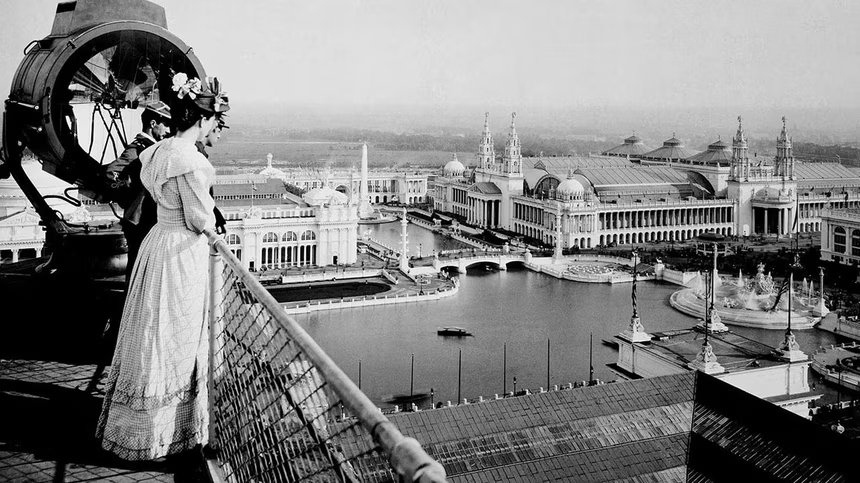
Chicago Stories - New Season!
Season 6 includes: The World’s Fair of 1893, Toy Town, Skyscrapers, and Home of the Irish.Providing Support for PBS.org
Learn Moreabout PBS online sponsorship- [Narrator] Coming up, they fled their homeland in the face of death.
- Well, it was a total cataclysm.
One-eighth of the population dies.
One quarter of the population leaves.
- [Narrator] And landed in a city that didn't want them.
- Being Irish and Catholic became a stigmatized identity.
- [Sean] Drunk, criminal, dirty, et cetera, et cetera.
- In many ways, it just beat the joy out of a lot of Irish.
- [Narrator] But the Irish fought back and fought hard.
- Their strategy is to survive as a group, to survive as a cohesive whole.
- [Narrator] They built neighborhoods, parishes, and political power.
- [Announcer] The greatest political leader in the country- - A new Chicago starts emerging, and the Irish were a central part of that.
- [Narrator] Once cast as outsiders, the Irish rose to define the city's soul.
- They would have a celebration.
They would march in those St.
Patrick's Day parades.
They're like, we're here, Chicago.
- [Narrator] They came with nothing, and they changed everything.
(bright music) Home of the Irish, next on "Chicago Stories."
(dynamic music) (bright music) If you know Chicago, you know it's a city of neighborhoods.
- Hello, Chicago.
- [Narrator] Delis and diners.
Cafes and carnicerias.
- [Patron] One sub.
- [Narrator] The Italian beef spot, and the corner dive bar.
(patrons chattering) (bright music continues) And seemingly everywhere you look, you'll find some celebration of religion: cathedrals, mosques, synagogues, temples.
Thousands of places of worship that provide the city with its spiritual backbone.
- I think one of the most incredible things about Chicago's religious architecture is its diversity.
From a steeple, to a dome, to a cross.
It's a way of saying, this is who we are in this city, but also makes us think of our higher selves.
(bright music continues) - [Narrator] This is Old St.
Patrick's on Chicago's Near West Side.
The oldest church in the city, it was built by Irish immigrants in 1856.
(soft music) Those who know it best call it the Famine Church.
- We come to our places of prayer to be reminded again who we are.
- When you walk into Old St.
Patrick's Church today, you immediately know there is something distinctively Irish.
- It's a very sacred place.
No matter what parish you are from, St.
Patrick's is the shrine, the shrine of the Irish Catholic community here in Chicago.
- When I think of the Irish in Chicago, I think of a story of grit.
I think of a community that has overcome a lot of obstacles, a lot of displacement and discrimination.
And so Old St.
Pat's is a great example of Irish resilience in the city.
(lighthearted music) - [Narrator] Beyond the shamrocks and the music, beyond the dyeing of the river, the story of the Irish in Chicago is ultimately one of perseverance, (gentle music) reflecting not just the Irish struggle but the journey taken by untold millions who came here from all corners of the globe, hoping for something better.
(gentle music continues) That is the tale embedded in the glass and stone of Old St.
Pat's.
(gentle music continues) And it all began some 3,000 miles distant in the rolling fields of Cork and Kerry, where, in 1845, a plague fell upon the land.
The people called it An Gorta Mor, The Great Hunger.
(gentle music continues) - [Announcer] On the Irish farms, the tenants depended on potatoes as the main food supply.
- [Narrator] Its scientific name is Phytophthora infestans, but most of the world knows it as potato blight.
Call it what you will, it's a microorganism that, as much as any war ever fought or doomsday weapon ever imagined, changed the face of the world forever.
- People can make jokes about the potato.
It's easy fodder.
But it's also important to remember that the potato was a totally rational and intelligent choice to make for poor people in Ireland.
- The Irish had been persecuted and oppressed in their own country, which was occupied by England since the 12th century.
Bit by bit, their rights and their land was taken away.
And they became tenants to often absentee landlords.
And they planted the potato because it had a ton of vitamin C, and they could feed their families.
So the reason they invested everything in this one crop is because that kept them alive.
- [Narrator] For seven years, a tiny pest turned Ireland's potato crop into black mold, triggering what is now known as The Great Famine.
- Well, it was a total cataclysm.
Over the course of seven years, one-eighth of the population dies.
There really are no aspects of Irish life that aren't changed by the famine.
(uneasy music) (reel clicking) - [Narrator] In a country of 8 million, 1 million men, women, and children lay dead in the houses and fields.
While another 2 million, facing starvation, packed up everything they owned and boarded boats bound for the new world.
- One aspect of Irish immigration that's a little different is the Irish don't go back.
They have things like the American wake, as if a kind of a symbolic death in many ways, 'cause you're not gonna see them again.
- [Narrator] Tens of thousands died on the trip across the Atlantic, causing the boats that carried them to be dubbed coffin ships.
(tense music) Those who survived gravitated to America's big cities: New York, Boston, and, of course, Chicago.
- So when the Irish came, the stereotype has been that they didn't really have a lot of skills.
They bring this sense that we are a community together, and we will support each other.
Their strategy is to survive as a group.
- [Narrator] From the outset, the men who ran the city wanted nothing to do with the newcomers.
The only jobs offered to the Irish, ones no one else was willing to take.
In 1845, that meant digging out the Illinois and Michigan Canal, a waterway that would eventually link the Great Lakes to the Mississippi, without the benefit of commercial steam shovels or dredging equipment.
Instead, the Irish were given picks and shovels, and told to dig the canal by hand, 96 miles worth, one treacherous foot at a time.
(crestfallen music) - This was an opportunity for them to make enough money to survive, but it was very hard work, 10, 12 hours of hard labor every day.
- They had to blast with dynamite.
They had to dig out swamps that released mosquitoes that led to malaria.
- There are riots, there's violence over access to work, hard drinking, hard fighting, living in tents and shanty towns right by the work sites.
This was a really hard life, and the letters they're able to send back reflect that.
- [Narrator] I wish I had you all out here.
We might be all happy today.
I had to stop writing.
My heart rose and tumbled close to my throat.
Many a tear splashed on that letter.
Love to all, from your heartbroken homesick.
- They're very emotive.
And they miss home, but they also know that there wasn't anything at home for them.
- [Narrator] The project took 12 years to complete and transformed Chicago from a frontier trading post to a growing, vibrant metropolis.
- You can walk along the towpath, and you can get a feel and a sense of what a monumental project this was.
- [Sean] This was the way that product moved.
This is what connected things to the kind of American capitalist economy that emerges.
Immigrants were the working people who stitched the country together.
(wind whooshing softly) (birds chirping) - [Narrator] Walk among the headstones at St.
James at Sag Bridge Cemetery, and you can see the price paid in immigrant lives.
More than a thousand dead, many of them Irish.
Men who gave up their lives in the hope of creating a better one.
If not for themselves, then for those who would follow.
- It just gives you a sense of, you know, these people who lived and loved and worked really hard.
So I think there's a sense of hope, hardship yet hope.
(gritty music) - [Narrator] Shortly after the canal was opened, the Irish comprised nearly 20% of Chicago's population and had, for better or worse, become part of the fabric of the city.
(gritty music continues) (equipment rumbling) - Irish men begin to just find jobs as common laborers.
They can work as dock hands.
They work in the lumber industry, brick-making, steel work, the railroads.
The Union Stockyards open up in 1865.
- A lot of working class Irish people move into Chicago, into that urban economy, occupying kind of disproportionately the bottom rungs of that.
- [Narrator] Having a job and earning a wage did not mean the Irish were encouraged to mingle with regular Chicago society.
In fact, it was quite the opposite.
Among the city's higher-ups, the Irishman was pegged as a rough-looking type, who didn't smell particularly good, was probably illiterate, and would, in a public setting, most likely drink until he dropped.
- [Rabblerouser] So you'll call me out, eh?
- [Narrator] Not the kind of guy you wanted to invite to the charity ball.
- How was your service, Bridget, or should I call it mass?
- Good.
I like St.
Patrick's.
- The new cathedral is a credit to the city, I'll give you that.
- [Narrator] The experience of Irish women, however, offered a stark contrast.
In shows like "The Gilded Age," we see them working as cooks and maids in wealthy New York households.
Chicago was no different.
An Irish woman working for the right family could make connections that would change her own life and her families' forever.
- Once Chicago begins to become more prosperous, Irish women can start to become domestic servants.
And, you know, on one hand, it's kind of a lonely job to live, by yourself in the homes of these middle class Protestants, but on the other hand, they learn middle class ways.
- [Narrator] Some Irish women weren't happy being cast as the hired help.
Some women wanted more, and some were natural born earth-shakers.
- One remarkable woman was Margaret Haley, born to immigrant Irish parents.
And she left school at 16 and went to teach in rural communities.
And then she came back to Chicago and became a teacher.
And then she got really upset when she realized just, most of the teachers were women, and they were not being paid well.
So she formed a teacher's union.
- [Narrator] Dubbed the Lady Labor Slugger, Haley became the face of what, at the time, was the most radical schoolteachers' union in the country.
Carl Sandburg once wrote of Haley, "This little woman has flung her fists into the faces of contractors... tax dodgers and their politicians, fixers, go-betweens, and stool pigeons."
(typewriter dings) (plucky music) - Irish women helped create what we would consider to be stable social services.
So that would be an education, that would be in community care, and, you know, that really helped create a foundation for how Irish integration could become a more stable force in the city.
- [Narrator] With their voices and their spirit, their intellect, and sometimes their bare knuckles, Chicago's Irish were slowly but surely starting to gain the city's trust.
But all of that was swept away in a single night, when a match was lit, and the city of Chicago was put to the torch.
(moves to tense music) If you live in Chicago, you know what it's like when the wind sweeps in off the lake.
Gusts of 30, 40, 50 miles an hour, whistling through the concrete canyons of the Loop, swirling around the tops of the skyscrapers, and rattling the bones of the L.
150 years ago, that wind was more than just a nuisance, more than just a reason to button up your coat before heading out the door.
It was a tragedy waiting to happen.
- As an Irish American born, you know, much later than that fire, I have learned so much about the living conditions, the poverty.
Oh my god, how did they live in those wood houses, one on top of another and all of that?
- [Narrator] The sprawling wooden slums of the Irish were seen as prime kindling for a stray match, a sentiment that helped fuel a rising tide of hatred among the city's elite.
If anything bad happened in Chicago, you could rest assured that people expected to find a drunk Irishman at the bottom of it.
(affecting music) - This is a pretty common trope throughout American history.
This anti-Catholic notion of the Irish as improvident, drunk, criminal, dirty, et cetera, et cetera.
(affecting music continues) - [Narrator] Fanning the flames were the city's newspapers, most notably the "Chicago Tribune" and its publisher, Joseph Medill, who used the Catholic faith of the Irish to paint them as loyal to the Pope and thus disloyal to the United States.
"Who does not know that the most depraved, debased, worthless and irredeemable drunkards and sots which curse the community are Irish Catholics?"
(typewriter dings) - I think discrimination is really rooted in fear and xenophobia.
And it's a concern that things are changing.
And so a way of controlling change is to control narratives and to create public fears, sense of concern about this change, instead of finding ways to integrate and embrace change.
(uneasy music) - [Narrator] Tensions were at an all-time high when, on the evening of October 8th, 1871, a fateful spark fell on a pile of straw in an Irish slum on the city's Near West Side.
Fed by 40 mile per hour winds, the Great Chicago Fire raged for three days, burning a third of the city to the ground.
(uneasy music continues) - What we know about the Great Chicago Fire is that the story that was attached to Mrs.
O'Leary's cow and her barn stuck very powerfully.
It's the narrative that people have heard, right?
- Catherine O'Leary was doing what good immigrants do.
She had a business.
Her home was open to her family and to those who needed care.
She was just automatically blamed for this huge fire.
- Mrs.
O'Leary and her cow is really a remnant of this discrimination against the Irish.
It really reveals where people were at in their impressions of who the Irish were.
- [Narrator] 150 years later, the story of Mrs.
O'Leary and her cow has been debunked.
At the time, however, it served its purpose, as the Irish found themselves again cast in the role of scapegoat and again losing their foothold in the city.
In the wake of the fire, developers moved in and tore down block after block of Irish housing, and a new Chicago began to rise.
How did the Irish respond?
They picked up their picks and their shovels and declared themselves ready, willing, and able to help Chicago rebuild, even if it was on the charred bones of their own homes.
- It's emphasizing just the absolute kind of determination to work through this, to survive, to pull one's life up.
These are the characteristics of kind of working class Irish people as they moved across the 19th century.
A new Chicago starts emerging, and the Irish were a central part of that.
(tool whirring) - [Narrator] That ability to adapt and willingness to do whatever it takes is still on display today, as what was once a hallmark of the Irish now is simply seen as the epitome of working Chicago.
- Well, today we're working in the rear yard.
We're building planter boxes.
It's just in our blood, I think.
We love it.
We love digging ditches.
(chuckles) - [Narrator] Eugene O'Donoghue came to Chicago from County Dublin in the early 1980s.
When he arrived, he knew barely a soul and got a job as a construction laborer, painting porches across the city.
(lighthearted music) In 1992, O'Donoghue started his own construction company.
Tapping into Chicago's Irish network, he grew the business from nothing into a multimillion dollar enterprise.
- I enjoy when you go home at night saying, there I did something today.
I can look at that and say, well done.
- [Narrator] The way O'Donoghue sees it, he's but another link in a chain that binds the Irish, one to the other, wherever they may be, and whatever challenges they might face.
- All the Irish before me, they were always showing you a better way, and make it easy for the next guy.
That was me.
(chuckles) (tools whirring) (lively music) - [Announcer] The Irish love fun and celebrations, too.
At the Irish Festival called Feis, the old arts of folk dancing and singing are staged.
(crowd cheering faintly) - [Narrator] A hooley, a ceili, the craic, (spirited shouting) it's a safe bet no culture has more or better ways of describing a party than the Irish.
And the reason is simple.
When you live for centuries on a rock in the middle of the Atlantic, you learn to lean on your neighbor and laugh at whatever the wide world throws at you.
Emigrating to America changed not one bit of that.
In other words, the Irish brought the party with them.
- When they came to Chicago, they would have a party.
They would have a celebration.
They were never known for being a quiet people.
They're like, we're here, Chicago.
(lively music continues) - [Narrator] For a hundred years, Irish dance in America was mostly a recreational pursuit, a way for immigrants to socialize, celebrate their heritage, or maybe step out with a pretty girl or handsome lad.
(shoes tapping) (intriguing music) Times, however, have changed.
(shoes tapping) (music quickens) - Trinity has existed for over 40 years.
Currently, we have dancers in ages from 3 1/2 all the way up to 18.
(shoes tapping) (fast-paced music) After three tries, in 1987, Trinity became the first North American school to win the world championships and has gone on to win countless titles since then.
(shoes tapping) (fast-paced music continues) - [Narrator] Chicago's Trinity Irish Dance Academy has been a fixture in Irish dance since 1982, with its performers appearing on "Good Morning America," "The Today Show," and in several feature films.
For all its success, however, even Trinity wasn't prepared for what would happen on April 30th, 1994.
- [Both] Ladies and gentlemen, Riverdance.
(dramatic music) (music brightens) (shoes tapping) - [Narrator] That was when the world first learned about a 36-year-old Chicago Irishman named Michael Flatley.
(bright music) Flatley honed his skills at Dennehy's Dance School on Chicago's South side.
A relative unknown in '94, his Riverdance show caught the eye of then Irish President Mary Robinson, who insisted Riverdance be included in the 1994 Eurovision contest held in Dublin and watched by 300 million people.
The rest, as they say, is history.
- We've come a long way.
Who could have guessed it?
Who could have dreamed it?
There is a god.
(dramatic music crescendos) (audience cheering) - [Narrator] In the world of modern dance, Riverdance was a game changer.
Today, groups like the Gardiner Brothers blend traditional Irish beats with American tap, ballet, hip hop, and even rock and roll to create a new form of dance that can be seen, well, just about everywhere.
♪ Trust me, on my I-N-D-E-P-E-N-D-E-N-T (censored) hustler ♪ - I have tremendous pride for how far Irish dance has come.
(bright music) (hands clapping) To see from our grassroots an art form make its way to the world's largest stages, to be so deeply rooted in the tradition while also pushing it forward.
- [Narrator] If Flatley was a pioneer of Irish dance, it was another Chicagoan, police chief Francis O'Neill, who did similar for traditional Irish music.
(lively music) Sit in on an Irish session anywhere in the world, and chances are you'll hear something that, but for the efforts of O'Neill, would have been lost forever.
- One of the things that Chief O'Neill does is collect traditional Irish tunes, in this moment when a lot of Irish nationalists were celebrating Irish music and Irish culture as something that made them different, unique, distinct from Britain.
- [Narrator] A piper and fiddler himself, O'Neill made it his life's work to record, study, and preserve all forms of traditional Irish music.
(lively music) Whether it was original sheet music or live recordings captured on wax cylinders, O'Neill was there.
Thanks to his scholarship, his passion, and his love of music, O'Neill saved hundreds of songs, reels, jigs, and ballads for us and generations to come.
(lively music) (audience applauding) (Narrator) As the 20th century unspooled, the perception of the Irish ditch digger was fading fast and giving way to the Irish architect, entrepreneur, fireman, and lots and lots of Irish cops.
(smooth music) To no one's surprise, it wasn't long before the surging Irish American voice found its way onto the printed page.
Once again, Chicago was at the forefront, with a young writer from the South side named James T. Farrell.
- James T. Farrell tries to chronicle what he actually sees.
(bright music) In the 19th century, Irish writing, Irish music, poetry was just full of sentimentality, gushiness.
But what Farrell noticed was just how is the whole immigrant experience.
In many ways, it just beat the joy out of a lot of Irish.
And it leaves a lot of scars.
(curious music) - [Narrator] Set in the working class of Chicago's South side, Farrell's novels offered a new take on America and the evolving identity of the Irish immigrant.
- So in the late 19th century, the Irish in Chicago were a group that were persecuted for their ethnicity.
But by 1916, when Farrell begins "Studs Lonigan," the Irish are aspiring to be middle class, and they're looking to distinguish themselves from other groups.
So the Irish go from being a group persecuted on account of their ethnicity to a group that is persecuting others on account of their ethnicity.
There is a dramatic monologue at the beginning of "Studs Lonigan" in which he's thinking about the good old days.
"Old Man Lonigan had his feet planted on the back porch railing.
He sat tilted back in his chair, enjoying his stogy.
He tried to remember those ragged days.
Often there had not been enough to eat in the house.
He and his brother had to stay home from school because they had no shoes.
Golly, even with all that privation, them was the days.
Things just change."
Chicago was nothing like it used to be.
What he goes on to say is Jews are moving into neighborhoods and renting places to Black people, and they're driving the Irish out.
That's something that Farrell sees as background for the horrible events of 1919.
(curious music continues) - [Narrator] July 27th, 1919, a hot summer's day along Chicago's lakefront, a day when the racial tension detailed in Farrell's novels spilled over into real life.
- Chicago was primed for conflict.
You have African Americans coming in on the heels of the Great Migration, looking for jobs and opportunity.
(uneasy music) - As the Irish are returning home from World War I, they're coming with new hopes and aspirations for an improved life, only to find that African Americans were in their jobs.
And they felt like this was an encroachment on their territory.
- So the fuse was lit, so to speak.
- [Narrator] A group of Black friends, including 17-year-old Eugene Williams, launched a homemade raft into the waters of Lake Michigan.
- The lakefront was just as segregated as every other place within the city of Chicago.
Unfortunately, without their knowing, they'd started to drift over to this white-designated part of the lakefront.
- [Narrator] When the boys crossed the invisible boundary separating the segregated beaches, a white man on shore, 24-year-old George Stauber, began pelting them with stones.
- They would duck down and pop back up and grab back onto the raft, and Eugene misjudged when to let go.
He let go of that raft and drowned, unfortunately, that day.
- [Narrator] Eugene Williams' death lit up Chicago, with white ethnic groups rampaging across the city for the better part of a week, looting and burning Black neighborhoods.
In the middle of the violence were roving packs of Irish youths.
A group long oppressed had, as Farrell foretold, turned on a dime and joined the ranks of oppressor.
- Those who are oppressed, oftentimes as they are looking to climb out of oppression, they will turn, unfortunately, their gaze onto the next targeted group.
- The racist behavior and violence directed at African Americans cannot be excused.
But in order to understand the dynamics of what occurred, you'll have to look beneath the surface of the violence.
And at the core was being displaced from jobs and the perception that your community was also under attack as well.
And for them not to see that the conditions were similar and to maybe pool their political power together to improve the conditions of both communities was unfortunate.
(tense music) (crowd chattering faintly) - [Narrator] In the riots' aftermath, the Hamburg Athletic Association, a South side Irish social club, was identified as one of the prime instigators of the violence.
One member of that club was a 17-year-old named Richard J. Daley.
(tense music continues) Although there is no evidence he ever took part in the violence, Daley would later serve as president of the Hamburg club.
- How are ya this morning?
- [Narrator] That, of course, was only a harbinger of what was in store for Chicago, as Richard J. would go on to become one of the most consequential politicians of the 20th century.
And he would shape the city in his image, for better or worse.
(patrons chattering) - A Guinness?
Yep.
We are at Shinnick's Pub right now.
This is my family's establishment since 1938.
There you go, honey.
They say that the Irish had children so they could have bartenders for seven days a week.
Hey, Ma.
- Yeah?
- This is kind of cool, isn't it?
So I have been lucky enough to be bartending here since I was 21.
Hi, honey.
How have you been?
We have been a place for people in the community to come and gather, to laugh, to cry, to vent, to cheers in good times and bad times.
You may walk in as a stranger, but I hope you leave as a friend.
(gentle music) - [Narrator] Slip onto a bar stool at Shinnick's on the city's South side, soak in the history, and understand that when it comes to Irish politics in Chicago, the tiny neighborhood of Bridgeport is and always will be ground zero.
(uneasy music) - We had Kelly, Kennelly, the two Daleys, and who am I leaving out?
Oh, Bilandic, yes, thank you.
How soon we forget.
- [Narrator] In the 20th century, Chicago had six Irish mayors, and five of them called Bridgeport home.
(uneasy music continues) - Bridgeport was dirty.
It butts right up against the Union Stockyards.
I mean, the stench, the dead animals thrown into, you know, Bubbly Creek, I mean, it was a pretty awful place in many respects.
- But Bridgeport was an economic hub, there were jobs, and that's what attracted Irish immigrants there.
The focus on government came about when the Irish started to get jobs in government, and then they understood that you weren't as prone to getting laid off as you were in the meat packing industry.
Eventually, there was a connection between all these government jobs and the politicians who controlled those government jobs.
(uneasy music slows) (group chattering faintly) - [Narrator] You scratch my back, I scratch yours, basic Chicago politics, and the fundamental operating principle behind what would become known worldwide as the Chicago machine.
- Anton Cermak is a political force in Chicago.
And he unfortunately gets assassinated in Florida, sitting next to FDR in a vehicle.
(gunshot bangs) (crowd shouting) And he's out of the picture.
- [Announcer] The greatest political leader in the country, the honrable Richard J. Daley.
(crowd cheering) - [Narrator] Into the gap stepped the Irish and in 1955 an every-man kind of guy named Richard J. Daley.
(camera shutter clicks) (crowd chattering) - What was he like?
It depended who he was with, right?
I mean, I don't think he was into dinner party repartee.
He was authentic.
- [Reporter] Why have these city employees who have left done so?
- I don't know.
You could answer that.
You're a journalist.
I'm not, I'm just a ordinary mayor.
- [Narrator] Daley's politics were transactional.
His message, simple: I'm gonna keep your alleys clean and your taxes low.
- [Daley] The policeman isn't there to create disorder.
The policeman is there to preserve disorder.
- Sure, there were malaprops and not the best use of grammar.
But he was doing what he thought he should do, just govern.
(marching drum music) (crowd cheering faintly) - [Narrator] Every March, Richard J. Daley led the St.
Patty's Day parade down State Street.
(lively music) For most Chicagoans, it was a great day out with the family.
For Daley, it was a wonderful affirmation of his Celtic roots, as well as a pointed message to Chicago and the world at large: the Irish run this city, and never forget it.
- Richard J. was still, deep in his bones, a visceral Irish nationalist.
He had grown up listening to the family stories about the oppression that the Irish had suffered and still felt that sense of not being quite good enough.
(lively music continues) (crowd chattering faintly) - St Patty's Day was, you know, a huge, huge event.
And he, of course, made it even bigger.
- [Narrator] Richard J. Daley ruled over Chicago for 21 years, during which time he built the city's famous skyline and presided over Chicago's ascendancy onto the global stage.
- He was told by an ally of his, put the money where people can see it.
And he took that to heart.
- (Mike) Richard J. clears the way for the Sears Tower, also the expansion of O'Hare Airport.
(traffic rushing) He bulldozes large stretches of the South side For what becomes the Dan Ryan Expressway.
Ditto for what becomes the Kennedy Expressway.
- Make no little plans.
He definitely made big plans.
- [Narrator] Daley's influence extended far beyond Chicago.
In 1960, he played the role of king maker, the man who made sure JFK would be the first Irish Catholic to sit in the Oval.
(crowd cheering) - Jack Kennedy didn't call the mayor of Chicago just because he thought he was a charming fellow.
He may or may not have thought Daley was very charming, but he needed him.
There were several congressional votes that Daley controlled outright.
- I don't know too much about the Washington picture.
I just am a local fellow, in a local community, trying to do the best job I can.
- I don't think Richard J. Daley ever had aspirations beyond becoming or being the mayor of the city of Chicago.
Because, to him, Chicago was the epicenter of political power in the United States of America.
- [Narrator] Decades later, his son Richard M. Daley followed in his footsteps, leaving his own mark.
(audience applauding) - [Announcer] Ladies and gentlemen, Mayor Richard M. Daley.
(dynamic music) - [Narrator] At every step of the way, father and son used political clout and intimidation to keep friends and foes in line.
The message was simple: underestimate us at your own peril.
- Don't be telling anyone in Chicago- - I know he'll- - he'll be stepped on- - I resent- - or anyone else.
Because as long as I'm mayor, no one will be stepped on.
- I resent- - I think the expression is, kiss the ring.
You know, you had to do that so that you had access.
All roads led to Daley.
- There's this truism that the Daleys were able to snap their fingers and, because they were bosses, they could make things happen.
That's not what it took.
- How are ya?
- That was the result of decades of political wheeling and dealing, and behind-the-scenes maneuvering.
- [Narrator] Political vision aside, Richard J. had his blind spots.
(tense music) (crowd screaming faintly) (distant siren wailing) Foremost among them, the legacy of racial unrest and inequality that became part of Chicago's DNA during his decades in office.
- There is no question that his legacy and his leadership contributed to building one of the greatest cities in the world.
On the other hand, a part of his legacy has to be the segregation that he fought for in the city of Chicago.
- A decent home for every family and- - (Mike) One of the most notorious things, Richard J. Daley presided over the explosion of new public housing construction.
(machine whirring) (wrecking ball crashing) His son famously, a generation later, tears many of them down because they had become dreadful places with inhuman living conditions.
- He was responsible for creating so much of what was great about Chicago and also for so many enduring wounds.
(tense music fades) - Richard J. Daley, the only mayor for a generation of Chicagoans, died today at 74.
- [Narrator] Richard J. Daley died in office on December 20th, 1976.
(bell tolling) He left this life having transformed Chicago into a global icon.
(gentle music) There were, however, cracks in the city's armor.
In the 1950s and '60s, white residents were fleeing the city in droves, riding Daley's new expressways out to the suburbs.
By 1970, 40% of the Irish population had left Chicago, and a community that once seemed unshakeable began to crumble.
(solemn music) (light music) (parish singing softly) Old St Patrick's Church was built with pennies from people who only had a few to their name, banished to the outskirts of a city that didn't want any part of the Irish or their churches.
The men and women who built Old St.
Pat's said, that's fine, we will call this patch our own.
- A church can be a place that is truly a sanctuary.
People would look for that, you know, tall structure in the sky and say, hey, this is a North Star; head there.
(tranquil music) (choir humming) - [Narrator] This place of refuge was one of the few buildings to survive the Great Chicago Fire.
And today, more than 150 years later, Old St.
Pat's is all about blending ancient Irish themes with a modern American aesthetic, from the stylish curve of the pews, to the Celtic knots carved into the sacristy walls.
Nowhere is that vision more celebrated than in the church's famous stained glass windows, designed by Irish Chicagoan Thomas O'Shaughnessy.
- When you walk into Old St.
Patrick's Church today, you're gonna see these glorious windows.
The light from the windows is coming in at you.
And he didn't call them stained glass windows.
He called them translucent mosaics of colored glass.
Boy, it was beautiful.
(gentle music) - [Narrator] O'Shaughnessy believed the aesthetics of the church should be a reflection of its people.
- So when Old St.
Pat's first opened its doors, it was a much more humble structure.
- There was nothing identifiably Irish in the art until Thomas O'Shaughnessy came on the scene.
- O'Shaughnessy studied at the Art Institute under Millet and becomes deeply inspired by what he sees during the World's Columbian Exposition of 1893, where he was able to see Irish identity on display.
So the Celtic revival style comes in a moment of Irish resurgence and interest in its own cultural heritage.
- And that is what O'Shaughnessy wanted to bring to the Irish immigrants and to the city of Chicago.
Hey, we have a history.
We have a civilization.
We are educated and all of that.
So he was trying to retrieve this lost and forgotten part of the Irish people in Chicago.
(gentle music fades) - [Narrator] Drawing from the Book of Kells as well as rural Irish images from the Colombian Exposition, O'Shaughnessy designed and installed 15 stained glass windows.
The work was painstaking and spanned a decade, from 1912 until 1922.
- O'Shaughnessy's designs for the church really make a statement of what it means to be Irish in Chicago.
So it's not necessarily a statement of what it means to be Irish in Ireland.
It is an interpretation of an American identity.
(bright music) - So Thomas O'Shaughnessy was spending a lot of time at Old St.
Pat's, creating these windows.
He ended up meeting a young lady who happened to be living at the rectory.
And apparently, Thomas O'Shaughnessy was taken by the color of blue in her eyes.
And her name was Brigid McGuire, who I'm named after.
It was my grandmother.
See, I'm already getting choked up.
(laughs) I go into old St.
Pat's, and it just, I get goosebumps.
- [Narrator] Today, folks from all over the world come to see Thomas O'Shaughnessy's windows.
Watching the light filter through them is a visceral experience, one that speaks to the unique and evolving Irish American identity.
- One of the ways to talk about why Old St.
Pat's is so important is to think about, what if it were gone?
- [Narrator] What if it were gone?
Hard as that might be to fathom, it almost happened.
(uneasy music) The year was 1983, and Old St.
Pat's was pretty much a ghost town, when a young priest arrived named Jack Wall.
- When I came, there were literally four parishioners.
The neighborhood had changed from being heavily residential to be more industrial.
And a lot of construction in the city, expressways could have torn the church down.
The great immigrant communities that came here for many, many generations, they found a home here, but all of a sudden, everybody left this neighborhood.
When you think of the West side, everybody thought of Skid Row.
And so the community here at one time was Skid Row.
(solemn music) But it was really desolate.
- [Narrator] In the early days of his ministry, Father Wall thought a lot about two things.
What did God have in mind for the old church, and how was St.
Pat's new and slightly bewildered young pastor supposed to proceed?
- So very early on, one night, I left everything else I was doing and just came over in the church, and a darkened church, and it's a beautiful experience, surrounded by all the Celtic saints, the Irish saints.
And I just sat here for a moment and just said, you know, this faith that we live in is deeply rooted in an inspirational people who made tough decisions.
And so you felt the weight and the inspiration of all the people that go before us.
I'm surrounded by people whom I'm in communion with right now who are saying, go for it.
(curious music) - [Narrator] Father Wall saw an opportunity.
The same obstacles that drove parishioners away from old St.
Pat's could be used to bring them back.
- Location, location, location.
The church literally sits on the beautiful East side banks of the Kennedy Expressway.
A million people would show up at the train stations every morning to go to work.
So I knew that the moment was really important.
And so the first thing we did was to start really reaching out to young adult groups.
- [Narrator] Father Wall had an idea.
He would create the world's largest block party.
In 1984, the block party was a sensation.
- The first night, we had 5,000 people on the block, and we were all amazed.
We couldn't believe it and said, we're onto something.
- I met my husband at a block party in 1987, and we were married three years later.
All these things were going on at St.
Pat's because Father Wall was dedicated to the life and the work of the laity in the world.
But Father Wall, he had a vision.
I don't know what else to say.
He had a vision for the church, and he did it.
(soft music) (crowd shuffling) - [Narrator] If you want to see Father Jack Wall's vision in full flight, walk into Old St.
Pat's on any Sunday morning and take a look at the faces in the pews.
Men and women, young and old, some whose last names are Murphy and Kelly, worshiping next to a Rossi, an Esposito, or a Grabowski.
- There are no strangers here at Old St.
Patrick's.
I invite you to stand and to greet one another with a happy St.
Patrick's Day.
- Happy St.
Patrick's Day.
- [Narrator] All are welcome.
All are part of the unfolding story.
(footsteps clacking) - [Michaela] All right, are we ready over there?
(intriguing music) (shoes tapping) (music and tapping quicken) - For the Irish, Chicago is a great success story.
(fast-paced music) (shoes tapping) - To encounter famine, to have to leave your home, to come to a place that you have nothing to offer, and they make it work.
(lively music) (hands clapping) - The Irish experience paved the way for other immigrant populations to come to this country and succeed.
(lively music continues) (hands clapping) - [Narrator] The power of the Irish, even generations removed from those first boats that arrived in 1845, the bond has never been stronger.
Everywhere you look, you will see the imprint of the Irish, a people pursued by famine and plagued by misfortune, unflinching in the face of prejudice and determined to make their mark no matter the cost.
A people who adapted, evolved, and ultimately thrived, all the while never forgetting who they were and from whence they sprang.
Perhaps that's at least one meaning of the green, a salute to the past and a shout-out to the future, telling anyone who's interested, this is Chicago, the home of the Irish.
(lively music swells) (shoes tapping) (audience applauding) (dynamic music) (dynamic music continues)
 New
Video has Closed Captions
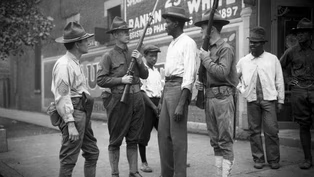
The 1919 race riot exposes Chicago’s racial tensions and the Irish gangs caught up in it. (3m 49s)
 New
Video has Closed Captions
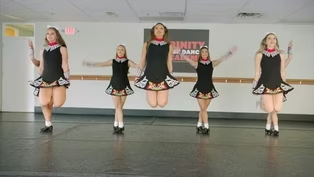
The Trinity Irish Dance Academy in Chicago explains what makes Irish dance unique. (5m 51s)
 New
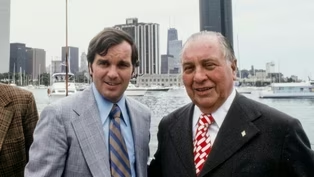
How Richard J. Daley Ruled Chicago Politics
Video has Closed Captions
Richard J. Daley built a political machine that transformed Chicago and left a complex legacy. (9m 7s)
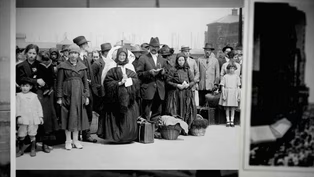 New
Irish Immigrants Struggle to Build a Life in Chicago
Video has Closed Captions
As newly arrived immigrants, the Irish struggled to get a foothold in Chicago. (6m 16s)
Providing Support for PBS.org
Learn Moreabout PBS online sponsorship








Support for PBS provided by:
Chicago Stories is a local public television program presented by WTTW
Lead support for CHICAGO STORIES is provided by The Negaunee Foundation. Major support is provided by the Abra Prentice Foundation, Inc. and the TAWANI Foundation.